Seedcore Case Study
The Aerial Advantage
The Aerial Advantage
Turning Drone Access into Property Insight
Turning Drone Access into Property Insight
Home
Company
Case Studies
The Aerial Advantage
Home
The Aerial Advantage
Company
Case Studies
Onboarding
3 days
Our work
10 days
Clarity period
30 days
Pre-everything
Drone / Local Service
Seedcore Concept
Kent Harrison
Onboarding
3 days
Our work
10 days
Clarity period
30 days
Pre-everything
Drone / Local Service
Seedcore Concept
Kent Harrison
How Seedcore helped a real-estate professional turn a loose idea about drones and building inspections into a clear, structured inspection documentation service.
How Seedcore helped a real-estate professional turn a loose idea about drones and building inspections into a clear, structured inspection documentation service.
Product
Product
Seedcore Concept
Industry
Industry
Property Inspection / documentation
Category
Category
Local Commercial Services
Kent Harrison
8 minute read
Founder Context
Kent Harrison works inside commercial real estate. For more than eight years his work has involved evaluating buildings and discussing maintenance decisions with property managers and asset owners. Roof deterioration, façade damage, drainage failures, and mechanical equipment issues are routine parts of those conversations.
Many of those discussions begin with the same constraint. The places that matter most on a building are often the hardest to access. Roof edges, upper façades, and rooftop mechanical units frequently require ladders, lifts, or outside contractors simply to view clearly. Decisions about repairs are often made with incomplete visual information.
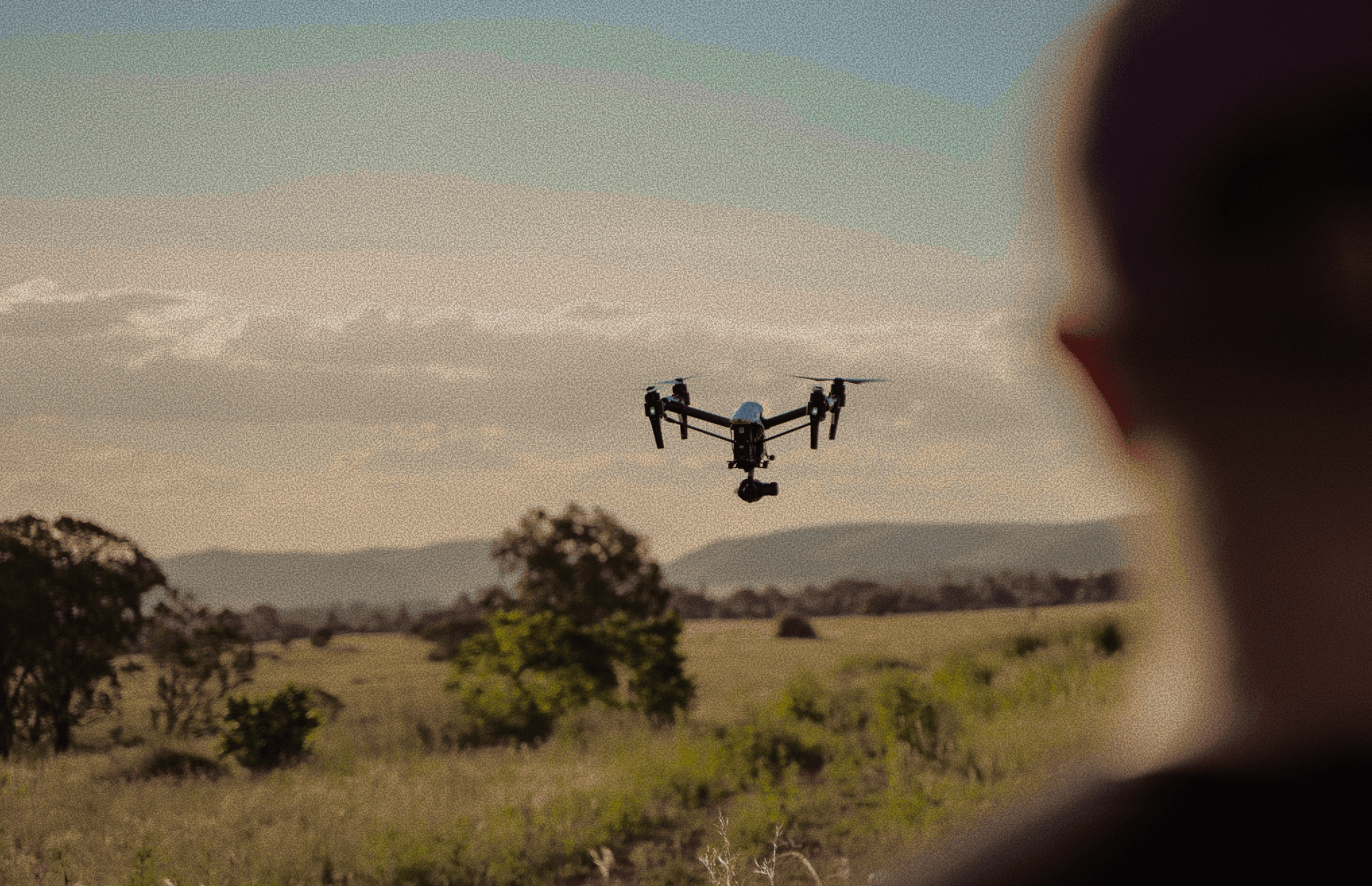
Outside of work Kent flew drones recreationally. It began as a hobby. Over time he became comfortable operating the equipment and started to notice something simple.
The drone could reach most of the places that inspections struggled to reach.
“I was constantly running into situations where people were trying to figure out what was going on with a roof or the top of a building,” Kent explained. “And I kept thinking, this would take five minutes with a drone.”
The idea formed slowly. Instead of drones being used primarily for photography or real estate marketing, they could be used to document building conditions.
At that stage the concept existed only as intuition. Kent had no defined service, no pricing model, and no clear understanding of how drone inspections were positioned in the market.
Setup
Kent purchased Seedcore Concept, our advisory product designed for early ideas and unexplored concepts. $260, one-time fee. The engagement is intentionally simple. It begins with onboarding and a discovery phase to understand the founder, the idea, and the surrounding context. From there, we move through our internal advisory process to evaluate, shape, and structure the concept—giving life to vision, providing structure to uncertainty, and cleaning up any loose ends or wrong turns.
Once the work is delivered, clients receive a 30-day clarity window. During this period they can ask follow-up questions, challenge assumptions, and work through the practical details of the concept and the direction that was established.
Kent arrived with very little formal structure around the idea.
There was no service definition, no written plan, and no clear market strategy. What he did have was a strong intuition. Years working around commercial buildings had exposed him to constant maintenance conversations, inspection challenges, and difficult-to-access parts of properties. At the same time, he had been flying drones recreationally and had begun to see how easily aerial access could capture the information that building stakeholders often struggled to obtain.
In Kent’s mind, the connection was obvious. Drones could help inspect buildings.
What was missing was everything around that observation. What the service would actually be. Who it would serve. How it would operate. Where it would enter the market.
That uncertainty is common at the concept stage. The idea feels right, but the structure around it does not yet exist.
From that starting point, the engagement focused on turning the intuition into a defined concept.
Challenge
Kent initially imagined building a broad drone services company. The idea covered aerial photography, video capture, inspections, mapping, and general drone work depending on the project.
That direction created immediate problems. This is a common early mistake: starting with a wide, undefined service offering instead of a focused entry point.
Broad service concepts feel flexible, but in practice they dilute positioning, complicate sales conversations, and make it difficult to build credibility in any specific use case. Instead of appearing capable, the business often appears unfocused.
Drone photography and media services are already crowded markets. Thousands of operators compete primarily on creative output and portfolio quality. Entering that environment would require marketing investment, equipment upgrades, and time spent building credibility in a field Kent had never intended to specialize in.
At the same time, traditional inspection firms already operate within the property and infrastructure space. Many of those firms use drones as part of their inspection process, but the drone itself is rarely the product. It is simply one tool among many used by engineers and licensed inspectors.
Kent’s original idea sat between these two worlds.
It was not specialized enough to compete with dedicated drone operators, and it did not resemble the structured services offered by inspection companies.
The problem was not the technology. The problem was definition.
Discovery
The early stage of the engagement focused on understanding the environment around the idea.
Across multiple industries, inspection and maintenance services are expanding rapidly. The global inspection, repair, and maintenance market is projected to exceed $70 billion by the end of the decade. A major driver of that growth is the shift toward remote inspection technologies such as drones, machine vision systems, and digital reporting platforms.
Drone adoption has been particularly strong in sectors where access is expensive or dangerous. Infrastructure, energy, manufacturing, and construction industries increasingly use aerial inspections to document conditions without requiring manual access.
Yet adoption at the building level is uneven.
Many property owners still rely on manual walkthroughs or occasional contractor inspections when evaluating asset conditions. Visual confirmation of roof conditions, drainage paths, or mechanical equipment placement often requires arranging ladders, lifts, or outside specialists.
This creates a practical gap.
Property stakeholders frequently need clear visual documentation before making maintenance decisions. They want to verify contractor recommendations, understand the condition of assets, or monitor changes over time.
In many situations, that does not require a full engineering inspection.
It requires organized visual documentation.
“That was the turning point for me,” Kent said. “I realized people didn’t necessarily need a huge inspection process every time. A lot of the time they just needed to see what was actually going on.”
Concept Formation
Once the problem space was clearer, the concept narrowed significantly.
Rather than operating as a general drone service company, Kent’s idea evolved into a focused drone inspection service designed to document building conditions.
The service centers on structured aerial capture of assets such as roof surfaces, drainage paths, façade sections, and rooftop mechanical units. Imagery is organized into clear visual documentation that property stakeholders can review when making maintenance or repair decisions.
Equally important were the boundaries.
The service does not provide engineering judgments, structural certifications, or code compliance evaluations. Those responsibilities remain with licensed specialists. The drone inspection service instead produces visual documentation that supports decision-making and identifies areas that may require further professional review.
Defining those boundaries was essential.
Without them, the concept could easily drift into areas involving regulatory exposure or unrealistic expectations from clients.
Service Structure
Turning the concept into a real service required translating the idea into repeatable operations.
The service was structured around standardized inspection formats rather than open-ended drone work. Each inspection follows a consistent capture approach designed to document key building features.
Typical capture categories include roof surfaces, drainage points, penetrations, façade sections, and rooftop mechanical equipment. Imagery is collected systematically and organized into a clear report format.
The report itself became a core part of the service.
Instead of sending a folder of raw photos, the inspection documentation organizes imagery and highlights observations so property stakeholders can interpret the condition of the building quickly.
Scope definitions were also established. The documentation identifies visible conditions but avoids engineering conclusions. When imagery reveals a potential structural issue, the report simply notes the observation and recommends that a licensed specialist review it.
This approach keeps the service useful without entering regulatory territory that requires engineering credentials.
“We didn’t want this to turn into something it wasn’t,” Kent said. “The value is being able to actually see the building clearly.”
Market Entry
Once the service structure was defined, the next question was where it could realistically begin.
Large infrastructure inspection contracts were not the right starting point. Those environments involve established firms, specialized certifications, and formal procurement processes.
Kent already had access to a different environment.
Small commercial property owners and managers of modest property portfolios. These stakeholders often manage multiple buildings but operate without large internal inspection teams. They regularly need visual confirmation of conditions before scheduling repairs or approving contractor work.
Drone-based documentation provides a direct advantage in these situations. It allows property stakeholders to see conditions quickly without arranging lifts, scaffolding, or additional contractors simply to observe a roofline or mechanical unit.
Kent’s professional background provided credibility within this environment. He already understood the priorities and decision processes of property managers.
“I’m already having these conversations every week,” Kent said. “The drone just gives people a clearer way to see what we’re talking about.”
Operational Reality
The service was designed around Kent’s real constraints.
Kent continues to work full-time in commercial real estate. The drone inspection service therefore begins as a serious side venture rather than an immediate full-time company. This structure allows the concept to develop through real engagements without financial pressure forcing rushed decisions.
Regulatory realities were addressed early as well. Commercial drone operations must comply with FAA rules governing airspace, proximity to people and structures, and pilot certification requirements. Insurance and operational compliance form part of the service baseline.
These constraints were treated as design parameters rather than obstacles.
They define how the service operates responsibly while it grows.
Outcome
The engagement began with a loosely defined idea about using drones around buildings. It ended with a structured service concept grounded in the realities of the property industry.
Kent left with a defined inspection model, a clear entry segment within the market, and a repeatable framework for conducting and documenting inspections. The service boundaries, regulatory considerations, and operational constraints were mapped openly rather than avoided.
Most importantly, the path forward was concrete.
Kent now knows what the service is, who it is designed for, and how to begin testing it with real property stakeholders. Early pilot inspections will refine the methodology and build a portfolio of documented examples.
For Kent the effect was immediate clarity.
“I knew the idea made sense,” he said. “I just didn’t know how to turn it into something real. Now I know exactly where to start.”
Drone technology was never the difficult part.
The real work was understanding where it belonged.
Additional Scope / Details
The case study above focuses on the central transformation of the idea, but the engagement itself covered a wider set of practical details needed to make the concept operational. Kent arrived with a strong intuition but very little structure around it.
Our work focused on building the surrounding framework so the idea could realistically move from a thought into a functioning service.
Beyond defining the concept itself, the engagement explored the operational, strategic, and practical elements required to launch and test the service in real environments. The goal was not simply to clarify the idea, but to ensure Kent understood the landscape around it, the constraints involved, and the steps required to begin executing it responsibly and professionally.
What we provided included:
Founder capability and constraint map — realistic view of skills, equipment, time availability, and operational limits
Inspection opportunity landscape — overview of where drone inspection is being adopted and where his background gives him entry
Defined service concept — articulation of the core service, the problems it solves, and the assets it targets
Productized service structure — defined service variants with standardized scope, deliverables, and boundaries
Inspection methodology framework — repeatable capture approach for roofs, façades, HVAC units, and similar assets
Standard deliverable template — structured inspection report format with organized imagery and annotations
Scope and limitation definitions — boundaries designed to avoid engineering claims or structural judgments
Regulatory and compliance baseline — FAA certification expectations, operational rules, airspace considerations, and insurance awareness
Market entry wedge — focused starting segment aligned with his professional network and industry exposure
Strength and risk assessment — advantages, credibility gaps, operational risks, and mitigation strategies
Pricing logic and quoting structure — pricing tied to asset size, complexity, and reporting depth
Operational workflow — end-to-end process from inquiry and site preparation to inspection, reporting, and delivery
Pilot project structure — format for early engagements designed to test the service and generate proof
Initial portfolio development plan — method for turning early inspections into credible case examples
Customer approach framework — positioning and messaging for introducing the service to property stakeholders
Expansion path map — future directions such as recurring monitoring, additional asset classes, and deeper reporting
Initial operating priorities — small sequence of actions to move from concept to first engagements
Early traction indicators — signals that confirm whether the concept is gaining real market pull
Additional discussions also covered practical startup considerations including incorporation options, how an early website should present the service clearly, references for professional presentation and design quality, potential platforms and avenues for early client discovery, and a small sales framework for introducing the service within the property industry.
Founder Context
Kent Harrison works inside commercial real estate. For more than eight years his work has involved evaluating buildings and discussing maintenance decisions with property managers and asset owners. Roof deterioration, façade damage, drainage failures, and mechanical equipment issues are routine parts of those conversations.
Many of those discussions begin with the same constraint. The places that matter most on a building are often the hardest to access. Roof edges, upper façades, and rooftop mechanical units frequently require ladders, lifts, or outside contractors simply to view clearly. Decisions about repairs are often made with incomplete visual information.
Outside of work Kent flew drones recreationally. It began as a hobby. Over time he became comfortable operating the equipment and started to notice something simple.
The drone could reach most of the places that inspections struggled to reach.
“I was constantly running into situations where people were trying to figure out what was going on with a roof or the top of a building,” Kent explained. “And I kept thinking, this would take five minutes with a drone.”
The idea formed slowly. Instead of drones being used primarily for photography or real estate marketing, they could be used to document building conditions.
At that stage the concept existed only as intuition. Kent had no defined service, no pricing model, and no clear understanding of how drone inspections were positioned in the market.
Setup
Kent purchased Seedcore Concept, our advisory product designed for early ideas and unexplored concepts. $260, one-time fee. The engagement is intentionally simple. It begins with onboarding and a discovery phase to understand the founder, the idea, and the surrounding context. From there, we move through our internal advisory process to evaluate, shape, and structure the concept—giving life to vision, providing structure to uncertainty, and cleaning up any loose ends or wrong turns.
Once the work is delivered, clients receive a 30-day clarity window. During this period they can ask follow-up questions, challenge assumptions, and work through the practical details of the concept and the direction that was established.
Kent arrived with very little formal structure around the idea.
There was no service definition, no written plan, and no clear market strategy. What he did have was a strong intuition. Years working around commercial buildings had exposed him to constant maintenance conversations, inspection challenges, and difficult-to-access parts of properties. At the same time, he had been flying drones recreationally and had begun to see how easily aerial access could capture the information that building stakeholders often struggled to obtain.
In Kent’s mind, the connection was obvious. Drones could help inspect buildings.
What was missing was everything around that observation. What the service would actually be. Who it would serve. How it would operate. Where it would enter the market.
That uncertainty is common at the concept stage. The idea feels right, but the structure around it does not yet exist.
From that starting point, the engagement focused on turning the intuition into a defined concept.
Challenge
Kent initially imagined building a broad drone services company. The idea covered aerial photography, video capture, inspections, mapping, and general drone work depending on the project.
That direction created immediate problems. This is a common early mistake: starting with a wide, undefined service offering instead of a focused entry point.
Broad service concepts feel flexible, but in practice they dilute positioning, complicate sales conversations, and make it difficult to build credibility in any specific use case. Instead of appearing capable, the business often appears unfocused.
Drone photography and media services are already crowded markets. Thousands of operators compete primarily on creative output and portfolio quality. Entering that environment would require marketing investment, equipment upgrades, and time spent building credibility in a field Kent had never intended to specialize in.
At the same time, traditional inspection firms already operate within the property and infrastructure space. Many of those firms use drones as part of their inspection process, but the drone itself is rarely the product. It is simply one tool among many used by engineers and licensed inspectors.
Kent’s original idea sat between these two worlds.
It was not specialized enough to compete with dedicated drone operators, and it did not resemble the structured services offered by inspection companies.
The problem was not the technology. The problem was definition.
Discovery
The early stage of the engagement focused on understanding the environment around the idea.
Across multiple industries, inspection and maintenance services are expanding rapidly. The global inspection, repair, and maintenance market is projected to exceed $70 billion by the end of the decade. A major driver of that growth is the shift toward remote inspection technologies such as drones, machine vision systems, and digital reporting platforms.
Drone adoption has been particularly strong in sectors where access is expensive or dangerous. Infrastructure, energy, manufacturing, and construction industries increasingly use aerial inspections to document conditions without requiring manual access.
Yet adoption at the building level is uneven.
Many property owners still rely on manual walkthroughs or occasional contractor inspections when evaluating asset conditions. Visual confirmation of roof conditions, drainage paths, or mechanical equipment placement often requires arranging ladders, lifts, or outside specialists.
This creates a practical gap.
Property stakeholders frequently need clear visual documentation before making maintenance decisions. They want to verify contractor recommendations, understand the condition of assets, or monitor changes over time.
In many situations, that does not require a full engineering inspection.
It requires organized visual documentation.
“That was the turning point for me,” Kent said. “I realized people didn’t necessarily need a huge inspection process every time. A lot of the time they just needed to see what was actually going on.”
Concept Formation
Once the problem space was clearer, the concept narrowed significantly.
Rather than operating as a general drone service company, Kent’s idea evolved into a focused drone inspection service designed to document building conditions.
The service centers on structured aerial capture of assets such as roof surfaces, drainage paths, façade sections, and rooftop mechanical units. Imagery is organized into clear visual documentation that property stakeholders can review when making maintenance or repair decisions.
Equally important were the boundaries.
The service does not provide engineering judgments, structural certifications, or code compliance evaluations. Those responsibilities remain with licensed specialists. The drone inspection service instead produces visual documentation that supports decision-making and identifies areas that may require further professional review.
Defining those boundaries was essential.
Without them, the concept could easily drift into areas involving regulatory exposure or unrealistic expectations from clients.
Service Structure
Turning the concept into a real service required translating the idea into repeatable operations.
The service was structured around standardized inspection formats rather than open-ended drone work. Each inspection follows a consistent capture approach designed to document key building features.
Typical capture categories include roof surfaces, drainage points, penetrations, façade sections, and rooftop mechanical equipment. Imagery is collected systematically and organized into a clear report format.
The report itself became a core part of the service.
Instead of sending a folder of raw photos, the inspection documentation organizes imagery and highlights observations so property stakeholders can interpret the condition of the building quickly.
Scope definitions were also established. The documentation identifies visible conditions but avoids engineering conclusions. When imagery reveals a potential structural issue, the report simply notes the observation and recommends that a licensed specialist review it.
This approach keeps the service useful without entering regulatory territory that requires engineering credentials.
“We didn’t want this to turn into something it wasn’t,” Kent said. “The value is being able to actually see the building clearly.”
Market Entry
Once the service structure was defined, the next question was where it could realistically begin.
Large infrastructure inspection contracts were not the right starting point. Those environments involve established firms, specialized certifications, and formal procurement processes.
Kent already had access to a different environment.
Small commercial property owners and managers of modest property portfolios. These stakeholders often manage multiple buildings but operate without large internal inspection teams. They regularly need visual confirmation of conditions before scheduling repairs or approving contractor work.
Drone-based documentation provides a direct advantage in these situations. It allows property stakeholders to see conditions quickly without arranging lifts, scaffolding, or additional contractors simply to observe a roofline or mechanical unit.
Kent’s professional background provided credibility within this environment. He already understood the priorities and decision processes of property managers.
“I’m already having these conversations every week,” Kent said. “The drone just gives people a clearer way to see what we’re talking about.”
Operational Reality
The service was designed around Kent’s real constraints.
Kent continues to work full-time in commercial real estate. The drone inspection service therefore begins as a serious side venture rather than an immediate full-time company. This structure allows the concept to develop through real engagements without financial pressure forcing rushed decisions.
Regulatory realities were addressed early as well. Commercial drone operations must comply with FAA rules governing airspace, proximity to people and structures, and pilot certification requirements. Insurance and operational compliance form part of the service baseline.
These constraints were treated as design parameters rather than obstacles.
They define how the service operates responsibly while it grows.
Outcome
The engagement began with a loosely defined idea about using drones around buildings. It ended with a structured service concept grounded in the realities of the property industry.
Kent left with a defined inspection model, a clear entry segment within the market, and a repeatable framework for conducting and documenting inspections. The service boundaries, regulatory considerations, and operational constraints were mapped openly rather than avoided.
Most importantly, the path forward was concrete.
Kent now knows what the service is, who it is designed for, and how to begin testing it with real property stakeholders. Early pilot inspections will refine the methodology and build a portfolio of documented examples.
For Kent the effect was immediate clarity.
“I knew the idea made sense,” he said. “I just didn’t know how to turn it into something real. Now I know exactly where to start.”
Drone technology was never the difficult part.
The real work was understanding where it belonged.
Additional Scope / Details
The case study above focuses on the central transformation of the idea, but the engagement itself covered a wider set of practical details needed to make the concept operational. Kent arrived with a strong intuition but very little structure around it.
Our work focused on building the surrounding framework so the idea could realistically move from a thought into a functioning service.
Beyond defining the concept itself, the engagement explored the operational, strategic, and practical elements required to launch and test the service in real environments. The goal was not simply to clarify the idea, but to ensure Kent understood the landscape around it, the constraints involved, and the steps required to begin executing it responsibly and professionally.
What we provided included:
Founder capability and constraint map — realistic view of skills, equipment, time availability, and operational limits
Inspection opportunity landscape — overview of where drone inspection is being adopted and where his background gives him entry
Defined service concept — articulation of the core service, the problems it solves, and the assets it targets
Productized service structure — defined service variants with standardized scope, deliverables, and boundaries
Inspection methodology framework — repeatable capture approach for roofs, façades, HVAC units, and similar assets
Standard deliverable template — structured inspection report format with organized imagery and annotations
Scope and limitation definitions — boundaries designed to avoid engineering claims or structural judgments
Regulatory and compliance baseline — FAA certification expectations, operational rules, airspace considerations, and insurance awareness
Market entry wedge — focused starting segment aligned with his professional network and industry exposure
Strength and risk assessment — advantages, credibility gaps, operational risks, and mitigation strategies
Pricing logic and quoting structure — pricing tied to asset size, complexity, and reporting depth
Operational workflow — end-to-end process from inquiry and site preparation to inspection, reporting, and delivery
Pilot project structure — format for early engagements designed to test the service and generate proof
Initial portfolio development plan — method for turning early inspections into credible case examples
Customer approach framework — positioning and messaging for introducing the service to property stakeholders
Expansion path map — future directions such as recurring monitoring, additional asset classes, and deeper reporting
Initial operating priorities — small sequence of actions to move from concept to first engagements
Early traction indicators — signals that confirm whether the concept is gaining real market pull
Additional discussions also covered practical startup considerations including incorporation options, how an early website should present the service clearly, references for professional presentation and design quality, potential platforms and avenues for early client discovery, and a small sales framework for introducing the service within the property industry.